

ทุกครั้งที่ถึงฤดูการเลือกตั้ง ภาษาอังกฤษกลายเป็นเครื่องมือสำคัญ ไม่ว่าจะเป็นการอ่านข่าวต่างประเทศ สนทนากับเพื่อนชาวต่างชาติ หรือสอบ IELTS ที่มักออกหัวข้อ Politics และ Society บทความนี้รวบรวม ประโยคเลือกตั้งภาษาอังกฤษ ตั้งแต่การไปใช้สิทธิ์ จนถึงการวิเคราะห์ผลการเลือกตั้ง พร้อม Grammar Tips และมารยาทที่ต้องรู้ก่อนพูดคุยเรื่องการเมืองกับชาวต่างชาติ
I. คำศัพท์และศัพท์เฉพาะด้านการเลือกตั้งในภาษาอังกฤษ
1. กลุ่มที่ 1: กระบวนการเลือกตั้ง (Electoral Process)
| คำศัพท์ | IPA | ความหมาย | ตัวอย่างประโยค |
| Election | /ɪˈlekʃən/ | การเลือกตั้ง | “The general election is held every four years.” |
| General election | /ˈdʒenərəl ɪˈlekʃən/ | การเลือกตั้งทั่วไป | “Voters turned out in high numbers for the general election.” |
| By-election | /ˈbaɪ ɪˌlekʃən/ | การเลือกตั้งซ่อม | “A by-election was called after the MP resigned.” |
| Referendum | /ˌrefəˈrendəm/ | การลงประชามติ | “The country held a referendum on the new constitution.” |
| Suffrage | /ˈsʌfrɪdʒ/ | สิทธิ์เลือกตั้ง | “Universal suffrage gives every adult the right to vote.” |
| Franchise | /ˈfræntʃaɪz/ | สิทธิ์ในการออกเสียง | “The franchise was extended to women in the 20th century.” |
| Polling Day | /ˈpəʊlɪŋ deɪ/ | วันเลือกตั้ง | “Polling Day falls on the first Sunday of May.” |
| Advance voting | /ədˈvɑːns ˈvəʊtɪŋ/ | การเลือกตั้งล่วงหน้า | “Advance voting opens three days before Polling Day.” |
| Absentee ballot | /ˌæbsənˈtiː ˈbælət/ | บัตรเลือกตั้งสำหรับผู้ไม่ได้อยู่ในเขต | “She submitted an absentee ballot from abroad.” |
| Overseas voting | /ˌəʊvəˈsiːz ˈvəʊtɪŋ/ | การลงคะแนนเสียงนอกประเทศ | “Overseas voting allows citizens living abroad to participate.” |
2. กลุ่มที่ 2: ผู้มีส่วนร่วมในการเลือกตั้ง (Key People)
| คำศัพท์ | IPA | ความหมาย | ตัวอย่างประโยค |
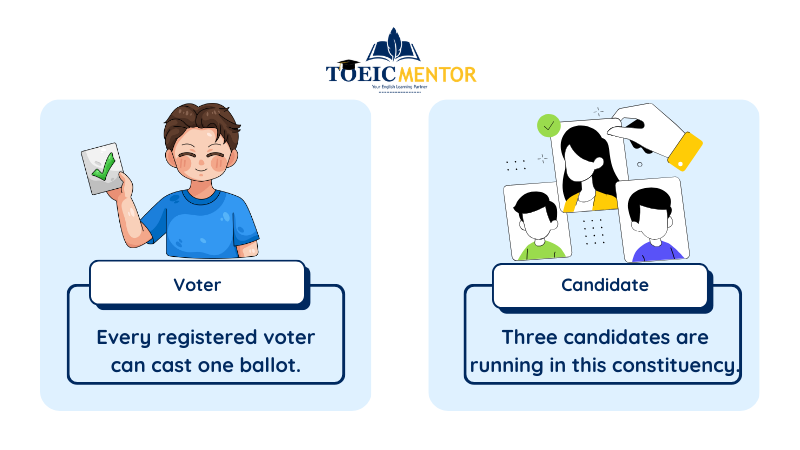
| Voter / Elector | /ˈvəʊtər/ /ɪˈlektər/ | ผู้มีสิทธิ์เลือกตั้ง | “Every registered voter can cast one ballot.” |
| Candidate | /ˈkændɪdət/ | ผู้สมัครรับเลือกตั้ง | “Three candidates are running in this constituency.” |
| Incumbent | /ɪnˈkʌmbənt/ | ผู้ดำรงตำแหน่งอยู่ในปัจจุบัน | “The incumbent won her third consecutive term.” |
| Running mate | /ˈrʌnɪŋ meɪt/ | คู่หูผู้สมัคร (เช่น รองประธานาธิบดี) | “She announced her running mate last week.” |
| Member of Parliament (MP) | — | สมาชิกสภาผู้แทนราษฎร | “Each MP represents one constituency.” |
| Prime Minister (PM) | — | นายกรัฐมนตรี | “The PM is chosen from the party with the most seats.” |
| Electorate | /ɪˈlektərət/ | กลุ่มผู้มีสิทธิ์เลือกตั้งทั้งหมด | “The electorate voted overwhelmingly for change.” |
| Poll worker | /pəʊl ˈwɜːkər/ | เจ้าหน้าที่ประจำหน่วยเลือกตั้ง | “Poll workers checked IDs at the entrance.” |
| Observer / Monitor | /əbˈzɜːvər/ | ผู้สังเกตการณ์การเลือกตั้ง | “International observers monitored the election.” |
3. กลุ่มที่ 3: สถานที่และอุปกรณ์ (Places & Materials)
| คำศัพท์ | IPA | ความหมาย | หมายเหตุ |
| Polling station | /ˈpəʊlɪŋ ˈsteɪʃən/ | หน่วยเลือกตั้ง | = Polling place (US) |
| Ballot box | /ˈbælət bɒks/ | หีบบัตรเลือกตั้ง | ใส่บัตรหลังกาเสร็จ |
| Ballot paper | /ˈbælət ˈpeɪpər/ | บัตรเลือกตั้ง | = Ballot card |
| Voting booth | /ˈvəʊtɪŋ buːθ/ | คูหาเลือกตั้ง | ที่กากบาทส่วนตัว |
| Electoral roll | /ɪˈlektərəl rəʊl/ | บัญชีรายชื่อผู้มีสิทธิ์เลือกตั้ง | = Voter registry (US) |
| Constituency | /kənˈstɪtjuənsi/ | เขตเลือกตั้ง | หน่วยพื้นที่สำหรับเลือก MP |
| District | /ˈdɪstrɪkt/ | เขต (ใช้กว้างกว่า constituency) | ใช้บ่อยในระบบ US |
4. กลุ่มที่ 4: การลงคะแนนและผลการเลือกตั้ง (Voting & Results)
| คำศัพท์ | IPA | ความหมาย | ตัวอย่างประโยค |
| Cast a ballot | /kɑːst ə ˈbælət/ | ลงคะแนนเสียง | “She cast her ballot at 8 a.m.” |
| Spoiled ballot | /spɔɪld ˈbælət/ | บัตรเสีย | “There were over 5,000 spoiled ballots.” |
| Abstain | /əbˈsteɪn/ | งดออกเสียง | “Ten MPs chose to abstain from the vote.” |
| Voter turnout | /ˈvəʊtər ˈtɜːnaʊt/ | อัตราผู้ออกมาใช้สิทธิ์ | “Voter turnout reached 78% — a 10-year high.” |
| Exit poll | /ˈeksɪt pəʊl/ | โพลสำรวจหลังออกจากคูหา | “Exit polls predicted a narrow victory.” |
| Tally | /ˈtæli/ | นับคะแนน | “The final tally showed a 2% margin.” |
| Majority | /məˈdʒɒrɪti/ | เสียงข้างมาก | “They won an absolute majority of seats.” |
| Plurality | /plʊˈrælɪti/ | เสียงมากที่สุด (ไม่ถึงกึ่งหนึ่ง) | “A plurality is enough to win in this system.” |
| Landslide | /ˈlændslaɪd/ | ชนะถล่มทลาย | “It was a landslide — they won by 40 points.” |
| Neck and neck | /nek ənd nek/ | สูสีมาก | “The race is neck and neck with 10% left to count.” |
| Swing seat / Swing state | — | เขต/รัฐที่ผลพลิกได้ | “All eyes are on the swing seats tonight.” |
| Safe seat | — | เขตที่พรรคหนึ่งชนะแน่ๆ | “This has been a safe seat for 20 years.” |
5. กลุ่มที่ 5: ระบบการเมืองและพรรค (Political Systems & Parties)
| คำศัพท์ | IPA | ความหมาย | หมายเหตุ |
| Democracy | /dɪˈmɒkrəsi/ | ระบอบประชาธิปไตย | รากฐานของการเลือกตั้ง |
| Political party | /pəˈlɪtɪkəl ˈpɑːti/ | พรรคการเมือง | — |
| Coalition | /ˌkəʊəˈlɪʃən/ | รัฐบาลผสม | “They formed a coalition after the hung parliament.” |
| Hung parliament | /hʌŋ ˈpɑːləmənt/ | สภาที่ไม่มีพรรคได้เสียงข้างมาก | เกิดบ่อยในระบบหลายพรรค |
| Opposition | /ˌɒpəˈzɪʃən/ | พรรคฝ่ายค้าน | “The opposition challenged the results.” |
| Platform | /ˈplætfɔːm/ | นโยบายรวมของพรรค | “Their platform focuses on healthcare reform.” |
| Campaign | /kæmˈpeɪn/ | การหาเสียง | “The campaign lasted three months.” |
| Manifesto | /ˌmænɪˈfestəʊ/ | แถลงนโยบายพรรค | “The party released its manifesto last Monday.” |
| Gerrymandering | /ˈdʒerimændərɪŋ/ | การตัดแบ่งเขตเลือกตั้งเพื่อได้เปรียบ | ศัพท์การเมืองระดับสูง |
6. กลุ่มที่ 6: การจัดตั้งรัฐบาลหลังเลือกตั้ง (Post-Election)
| คำศัพท์ | ความหมาย | ตัวอย่างประโยค |
| Form a government | จัดตั้งรัฐบาล | “The winning party will form a government by Friday.” |
| Dissolve parliament | ยุบสภา | “The PM dissolved parliament ahead of schedule.” |
| Concede defeat | ยอมรับความพ่ายแพ้ | “He conceded defeat in a gracious speech.” |
| Declare victory | ประกาศชัยชนะ | “She declared victory before all votes were counted.” |
| Transition of power | การส่งมอบอำนาจ | “The peaceful transition of power began immediately.” |
| Recount | นับคะแนนใหม่ | “The losing party demanded a recount.” |
| Electoral fraud | การทุจริตการเลือกตั้ง | “Allegations of electoral fraud emerged the next day.” |
7. กลุ่มที่ 7: สำนวนในข่าวการเลือกตั้ง (News Idioms & Phrases)
| สำนวน | ความหมาย | ตัวอย่าง |
| Hit the campaign trail | เริ่มออกหาเสียง | “The candidate hit the campaign trail in January.” |
| Race to the finish | แข่งขันกันจนถึงนาที่สุดท้าย | “It’s a race to the finish in this tight contest.” |
| Win by a hair | ชนะอย่างฉิวเฉียด | “She won by a hair — only 300 votes.” |
| Upset victory | ชนะแบบพลิกความคาดหมาย | “His upset victory shocked political analysts.” |
| Dark horse | ผู้สมัครที่ไม่มีใครคาดว่าจะชนะ | “She’s the dark horse of this election.” |
| Jump on the bandwagon | เข้าร่วมกับฝ่ายที่กำลังได้รับความนิยม | “Many voters jumped on the bandwagon after the debate.” |
II. การสนทนาและมารยาททางสังคม

1. วิธีถาม-ตอบอย่างสุภาพ
การเลือกตั้งภาษาอังกฤษ เป็นหัวข้อที่ต้องพูดด้วยความระมัดระวัง โดยเฉพาะกับคนที่เพิ่งรู้จัก การใช้ Modal Verbs อย่าง Would และ Could ช่วยให้ประโยคฟังนุ่มนวลขึ้นมาก
บทสนทนาจำลอง:
- A: “May I ask who you’re planning to vote for?” (ขอถามได้ไหมว่าคิดจะเลือกใคร?)
- B: “I’m still undecided, to be honest. I’m weighing my options.” (จริงๆ ยังไม่ตัดสินใจเลย กำลังพิจารณาอยู่)
- A: “That’s fair. The candidates all have different platforms this time.” (เข้าใจได้ รอบนี้แต่ละคนก็นโยบายต่างกันนะ)
ประโยคสำหรับ เลี่ยงการตอบ อย่างสุภาพ:
- “I prefer to keep my vote private.” → ขอเก็บเป็นความลับส่วนตัวนะ
- “I’m still making up my mind.” → ยังตัดสินใจไม่ได้เลย
- “I’d rather not discuss politics.” → ไม่อยากคุยเรื่องการเมืองมากกว่า
2. ข้อควรระวังและวัฒนธรรม
ในหลายประเทศ โดยเฉพาะอังกฤษและสหรัฐอเมริกา การถามตรงๆ ว่า “Who did you vote for?” ถือเป็น Taboo เพราะคะแนนเสียงเป็นเรื่องส่วนตัวมาก การถามแบบ Indirect Questions จะสุภาพกว่ามาก
Grammar Tip: Indirect Questions ช่วยให้ฟังสุภาพขึ้น
- แบบตรง: “Did you vote?” → อาจฟังดูรุกเกินไป
- แบบอ้อม: “I was wondering if you had a chance to vote?” → นุ่มนวลกว่ามาก
การเลือกตั้งคือหัวข้อที่เชื่อมโยงทุกคนเข้าหากัน ไม่ว่าจะอยู่ที่ไหนในโลก คำว่า democracy, suffrage, และ transition of power จึงไม่ใช่แค่ศัพท์สอบ แต่คือภาษาที่ใช้สื่อสารความเป็นพลเมืองโลก ยิ่งเข้าใจคำเหล่านี้มากเท่าไหร่ การอ่านข่าว ติดตามสถานการณ์โลก และแสดงความคิดเห็นเป็นภาษาอังกฤษก็จะคล่องขึ้นตามมาเอง

